Archives
- 2026-07
- 2026-06
- 2026-05
- 2026-04
- 2026-03
- 2026-02
- 2026-01
- 2025-12
- 2025-11
- 2025-10
- 2025-09
- 2025-03
- 2025-02
- 2025-01
- 2024-12
- 2024-11
- 2024-10
- 2024-09
- 2024-08
- 2024-07
- 2024-06
- 2024-05
- 2024-04
- 2024-03
- 2024-02
- 2024-01
- 2023-12
- 2023-11
- 2023-10
- 2023-09
- 2023-08
- 2023-06
- 2023-05
- 2023-04
- 2023-03
- 2023-02
- 2023-01
- 2022-12
- 2022-11
- 2022-10
- 2022-09
- 2022-08
- 2022-07
- 2022-06
- 2022-05
- 2022-04
- 2022-03
- 2022-02
- 2022-01
- 2021-12
- 2021-11
- 2021-10
- 2021-09
- 2021-08
- 2021-07
- 2021-06
- 2021-05
- 2021-04
- 2021-03
- 2021-02
- 2021-01
- 2020-12
- 2020-11
- 2020-10
- 2020-09
- 2020-08
- 2020-07
- 2020-06
- 2020-05
- 2020-04
- 2020-03
- 2020-02
- 2020-01
- 2019-12
- 2019-11
- 2019-10
- 2019-09
- 2019-08
- 2019-07
- 2019-06
- 2019-05
- 2019-04
- 2018-07
-
In the current investigation we studied
2024-07-23
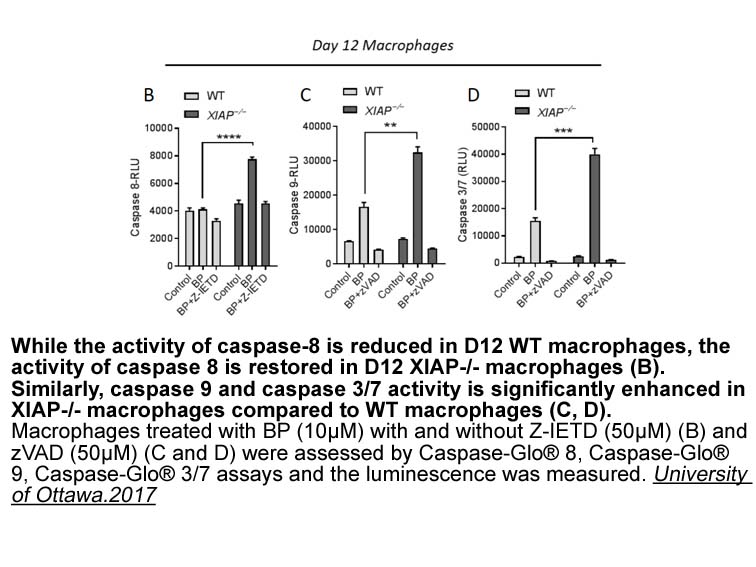
In the current investigation, we studied the effect of propofol on prostate cancer cells. Propofol is one of the most commonly used drugs in the critical care setting and for the induction of general anesthesia and moderate and deep sedation intraoperatively. Recent studies indicated that propofol e
-
Another interesting interaction concerns NMDA preconditionin
2024-07-23
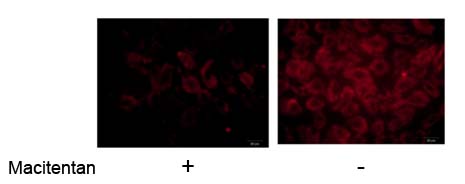
Another interesting interaction concerns NMDA preconditioning to protect against glutamate neurotoxicity. It has been shown that an A1R antagonist prevented neuroprotection evoked by NMDA preconditioning against glutamate-induced cellular damage in cerebellar granule cells. In this study, the functi
-
br Functional consequences of ADK regulation on astrocyte
2024-07-23
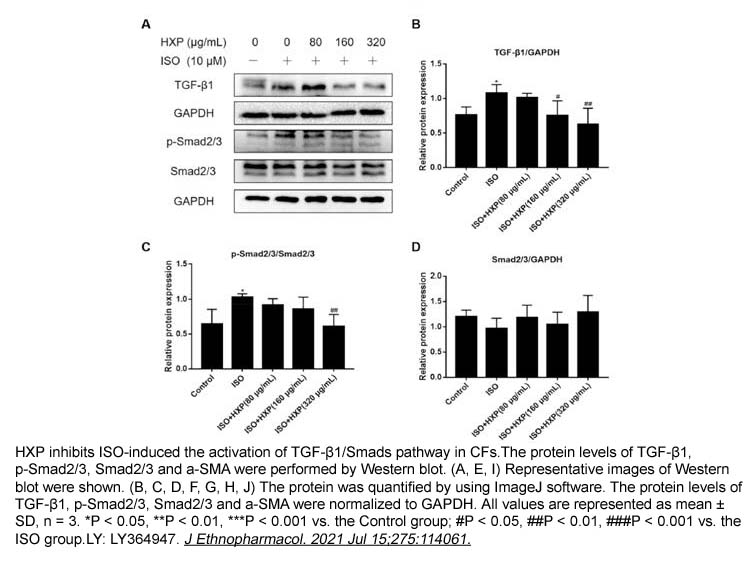
Functional consequences of ADK regulation on astrocyte function As outlined above (see introduction), ADK critically regulates the extracellular adenosine levels in AS1404 (Boison, 2006, Etherington et al., 2009). Changes in the levels of adenosine, as a result of the regulation of ADK expressio
-
An alternative approach to the administration of ADO agonist
2024-07-23
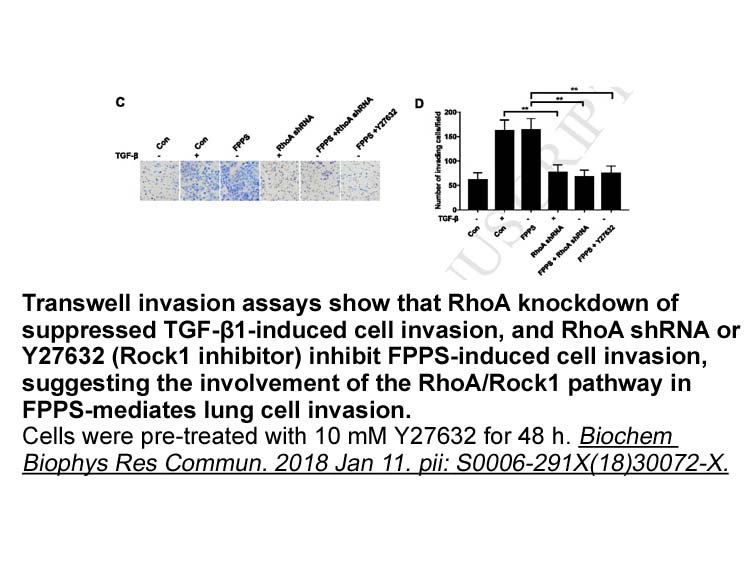
An alternative approach to the administration of ADO agonists is to amplify the actions of endogenous ADO by inhibiting the ADO-metabolizing enzyme, ADO kinase (AK). Inhibition of AK has the net effect of potentiating the local concentration and the effects of ADO in the extracellular compartment. T
-
br COX and LOX in post mortem AD brain
2024-07-23
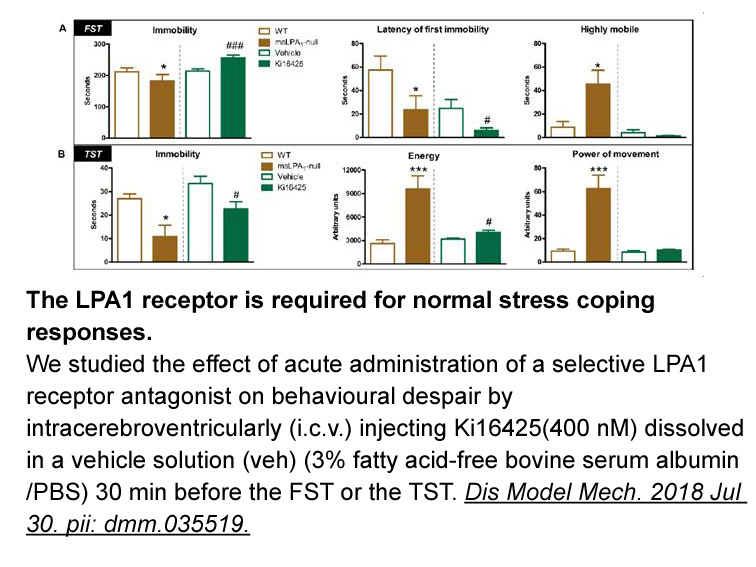
COX and 5-LOX in post-mortem AD brain Minghetti (2004) reviewed the findings on COX-2 mRNA levels in AD brains, pointing out that the available evidence demonstrated either decreased or increased levels, possibly because of the short half-life of COX-2 transcripts or individual variability. Histo
-
For the NSCLC patients with EGFR activating mutations EGFR
2024-07-22
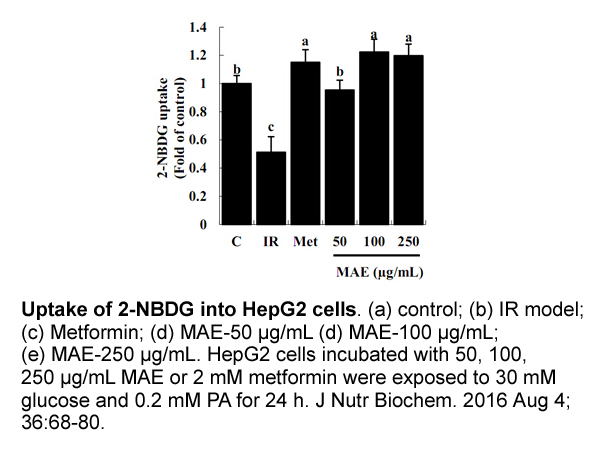
For the NSCLC patients with EGFR-activating mutations, EGFR-TKIs (gefitinib and erlotinib) are effective clinical therapies [21], [22]. However, approximately 10% of patients harboring EGFR-sensitizing mutations exhibit intrinsic resistance, and up to 40% do not attain a major response to treatment
-
Nowadays more than kinases have been identified
2024-07-22
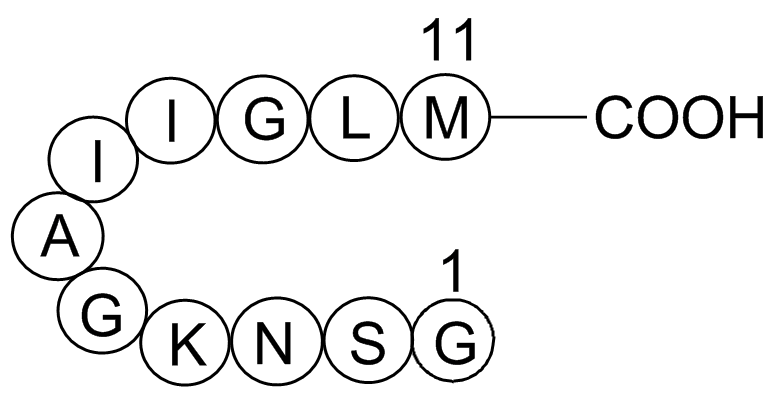
Nowadays, more than 500 kinases have been identified of human genome [2]. Imatinib (Gleevec) was the first tyrosine kinase inhibitor approved by the US Food and Drug Administration (FDA) for the treatment of chronic myeloid leukemia [3], and kinases have become an attractive target for the developme
-
Our results suggest that plasma membrane and a
2024-07-22
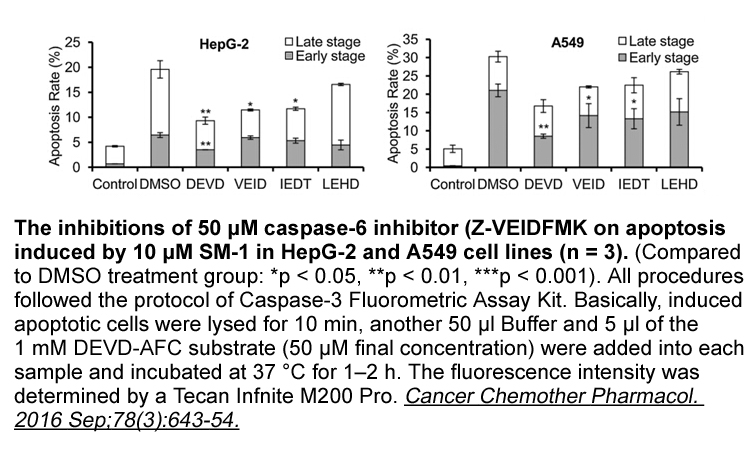
Our results suggest that plasma membrane and a3-containing V-ATPases represent an important and novel target in the development of drugs to limit breast cancer metastasis. That knock-down of a3 has been shown to reduce metastasis of melanoma cells in an in vivo mouse model suggests that this role ma
-
Two critical determinants of receptor trafficking are found
2024-07-22
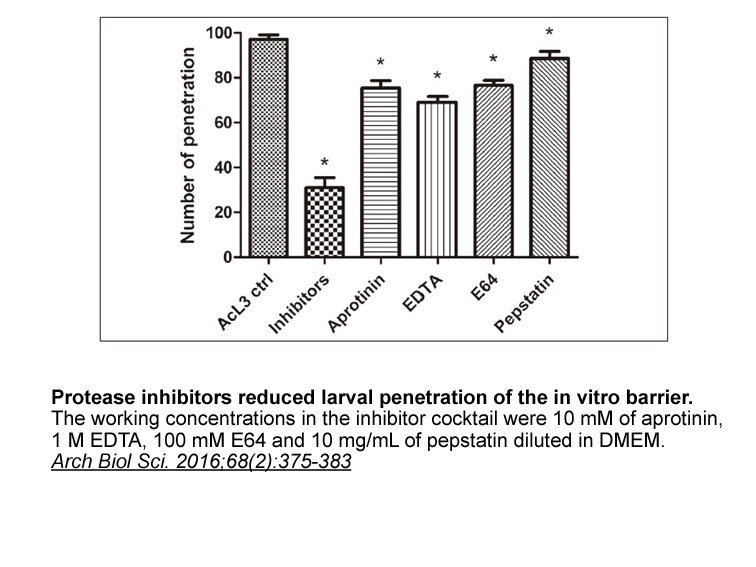
Two critical determinants of receptor trafficking are found within the GABAB1 cytoplasmic tail: the di-leucine internalization signal (EKSRLL) (Margeta-Mitrovic et al., 2000, Restituito et al., 2005) and the ER retention signal (RSRR) (Calver et al., 2001, Margeta-Mitrovic et al., 2000, Pagano et al
-
A disruption of lung barrier function caused
2024-07-22
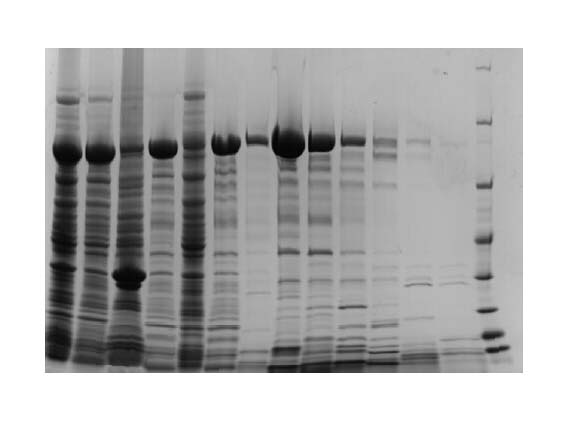
A disruption of lung barrier function caused by PM2.5 has been observed in our experiments; however the underlying mechanism has not been investigated. Zhao et al. (2018) reported that PM2.5 down-regulated the expression levels of tight junction (TJ) proteins and resulted in nasal epithelial barrier
-
Apelin is a bioactive peptide and endogenous ligand
2024-07-22
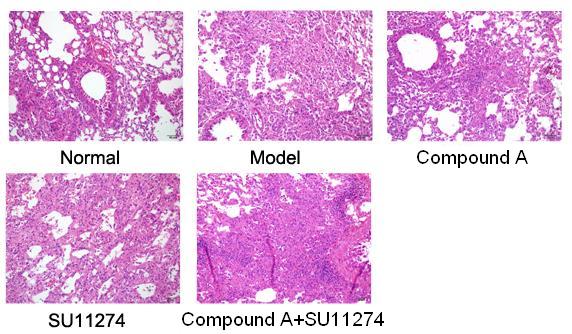
Apelin is a bioactive peptide and endogenous ligand for the APJ receptor (APLNR), a member of the G protein coupled receptor family that shares a similar sequence as the angiotensin type-1 receptor (AT1) [5]. Early studies demonstrated that the apelin/APLNR receptor axis plays a significant role in
-
HMGA proteins have also been linked to localized changes
2024-07-22
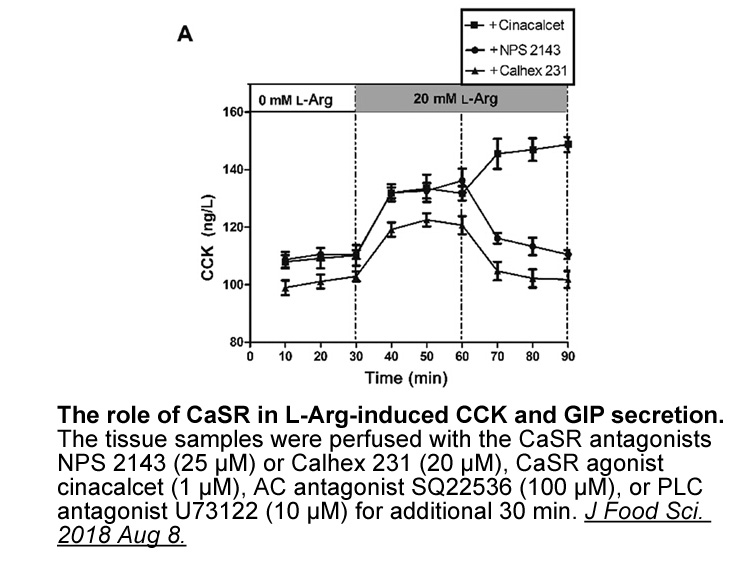
HMGA proteins have also been linked to localized changes in chromatin/nucleosome structure and alterations of cellular phenotype during induction of gene transcription in activated T lymphocytes. An adaptive immune response is initiated when naïve resting T lymphocytes encounter their corresponding
-
br Acknowledgement br Introduction Estrogens
2024-07-22
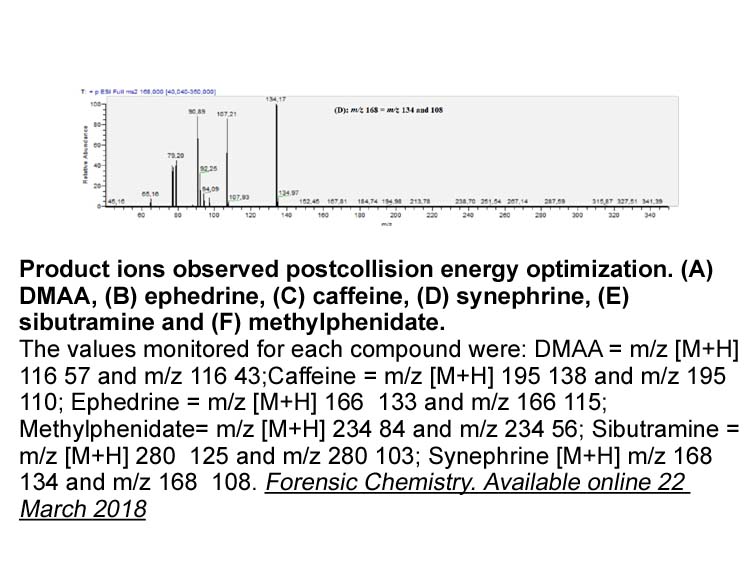
Acknowledgement Introduction Estrogens play an important role in the development and progression of breast cancer (McGuire et al., 1976; Clemons and Goss, 2001). 17β-Estradiol (E2), the most biologically active estrogen in breast tissue, functions via its nuclear receptors, estrogen receptor (
-
br Technical Note Fungal spoilage of dairy products remains
2024-07-22

Technical Note Fungal spoilage of dairy products remains a major concern for dairy manufacturers despite the use of preventive and control approaches, including the use of chemical preservatives. Among methods that are increasingly used by industries for microbial contaminant control, biopreserva
-
Another class of AMPK regulator is peptidyl prolyl
2024-07-22
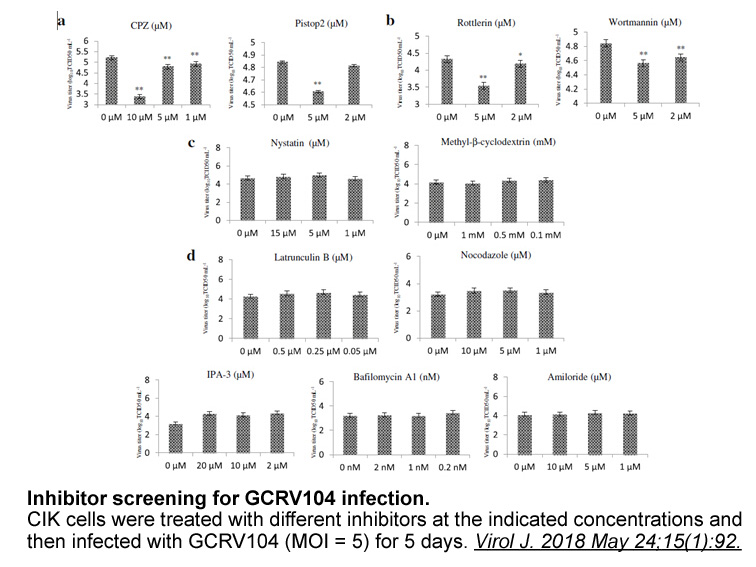
Another class of AMPK regulator is peptidyl-prolyl cis/trans isomerase (PPIase) NIMA-interacting 1 (Pin1), which binds to a number of proteins and regulates oncogenesis and metabolic diseases (Khanal et al., 2013; Zhou and Lu, 2016). Pin1 has been shown to bind to and inhibit AMPK; therefore, at lea
16206 records 143/1081 page Previous Next First page 上5页 141142143144145 下5页 Last page